Showing posts with label composition. Show all posts

11 October 2011

Black and White Treatment

I've spent some portions of my time shooting limiting myself to black and white for sake of the effects.  One of the images from Getty really worked out well for a bit of levels enhancement and a black and white treatment:

Before
The image is low-contrast and relatively blurry in the original form—manually focusing at 400mm is tough given how thin the depth of field is.  The birds on the posts are generally sharp, and the ones flying aren't.

The levels enhancement helps the contrast some, but it makes the image a little over done.  Fortunately, a black and white treatment really helps:

After
All in all, I think it's quite an improvement—and the print of the black and white version was pretty terrific.  One of my recent favorites, to be sure.

Compositionally it could probably be better (the dark spot in the upper left is a small overhang from a tree a few feet away), but it does handle rule of thirds fairly nicely I suppose.  The blurriness of the image is actually somewhat attractive here, as it helps to distinguish the middle third from the bottom one.  I'm undecided about whether the top third is compositionally useful or not—if not, a crop might serve better to fill things more adequately.

28 September 2011

More on Compression

To illustrate compression better, I've included the following pictures:


The one on the left is taken with the 85mm f/1.8.  The one on the right is taken with the 400mm f/5.6.  In this case, I tried pretty hard to keep them at the same size and fix the reference point (the brick column in the center of the background building).

The background in the second picture is much closer than it is in the first.  In a way this makes perfect sense.  What if we were going to focus on the background instead of the foreground?  It stands to reason that the background would "feel" closer with the longer focal length (greater zoom).

The important thing to realize is that when we keep the foreground elements the same size (roughly), the background will seem closer with a longer focal length.  In the first picture, I was perhaps six feet away from the subject.  In the second picture, it was closer to thirty or forty feet.  I would guess the background building is 500 feet or more away from the subject.

This, incidentally, is probably the way that we get some cool effects in Hollywood.  I'm thinking specifically of this shot from Lord of the Rings:


In particular, note in the beginning of the clip how the background changes compression.  What the filmmakers have done here is to rack the camera backward while zooming in.  A tree appears in the foreground while the background appears to get closer.  It creates just the sort of creepy experience you'd want when a Nazgul is about to appear.


23 September 2011

Focal Length and Compression

It's been awhile since I've been writing here.  This isn't because I haven't taken any pictures—it's because I have little time in my personal life to write much of anything, to say nothing of a photography blog.

However, I recently acquired a Nikkor 400mm f/5.6 AI-S and 85mm f/1.8 (AI'd).  Manual focus isn't everyone's thing, but I have enjoyed it a fair amount, and these are focal lengths of some interest to me, and help to illustrate how the longer focal length tends to "compress" a scene.

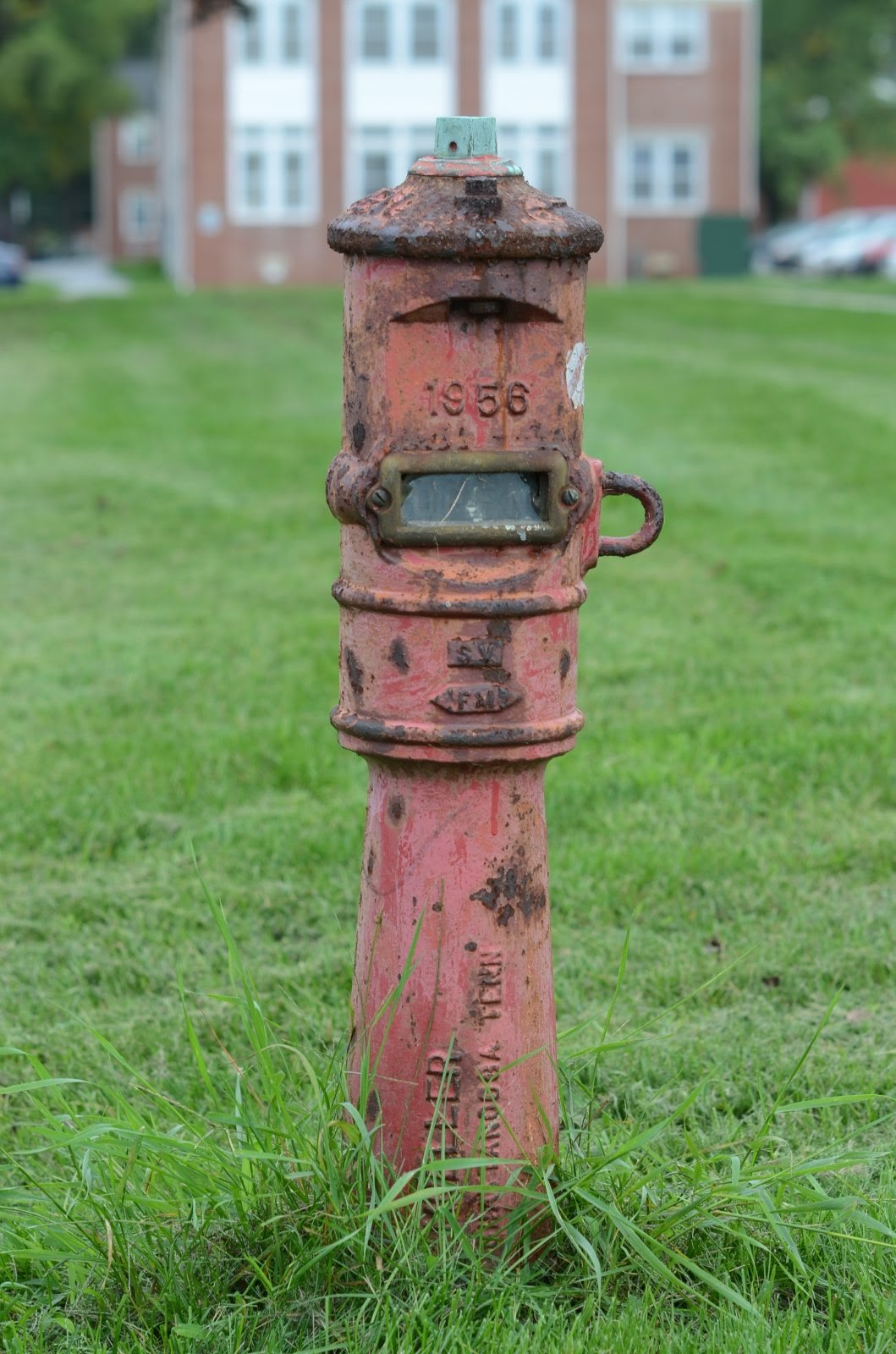
Here's a picture from the 85:

Fire hydrant?  85mm f/2.8, 1/5000s @ ISO 400

While they're not super obvious, there are clearly buildings in the background some distance away.  A somewhat equivalent picture from the 400:
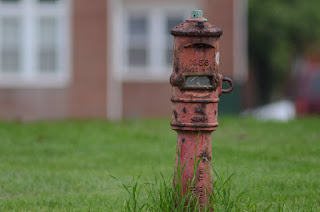
400mm f/5.6, 1/1600s @ ISO 800
I did not take the most extreme care to ensure that the scenes were identical, but hopefully the compression is fairly obvious.  The background "feels" so much closer in this image than it does in the previous.  This is due to the compression induced by the focal length.  What this means is that the longer focal length (i.e., telephoto lens) tends to bring the background closer while the shorter focal length (i.e., wider angle) will present a scene with greater depth.


And just to make you jealous, a moon shot from the 400; it's cropped, run through unsharp, and has been color corrected some:

400mm f/8, 1/1000s @ 800 ISO; hand-held

03 December 2010

Perspective

Thom Hogan (page at right) put together a string of posts he calls "you week." The page itself is fairly long, but his commentary is well worth reading. He gave an assignment: take a fixed lens, set your camera to manual focus/exposure, and go shoot. He comments on a few reactions:

You discovered that your pictures looked different. Using only one focal length tends to make you move in order to frame your shot. Moving to frame changes your perspective. When you start changing perspective between shots you get pictures that leave differing impressions of foreground and background relationships. Heard about the 3D craze going around Hollywood? Well, you just discovered 2D. All good. You need more practice, though. Take two primes of different focal length and start exploring moving in relationship to your subject.


This is a really interesting comment, because it demonstrates so clearly what makes primes an interesting tool: perspective. Perspective is influenced by both the focal length and distance to the subject. Framing the subject in the same space using two different focal lengths requires moving back and forth—and it represents things much differently.

20 August 2010

Before and After

Composition remains one of my worst skills. I usually shoot very instinctively, and unfortunately my instincts are not all that great.

Often I'll shoot out the car—it's no-look shooting, don't worry; I tape the lens at infinity and don't consult the viewfinder—using the 24mm. It's fast enough, and the wider field of view gives a few more options for cropping. Moreover, the exposure is completely manual, which adds a bit of randomness—it's not adjusting to changing lighting conditions. The exposure is sometimes pretty interesting.

I am usually too lazy to edit photos, but I made an exception in this case.